How Modern Ad Formats Influence User Attention and Engagement
Digital advertising has evolved far beyond static banners and basic pop-ups. Modern advertisers design ad formats to capture user attention quickly, encourage interaction, and deliver measurable results. Interactive video, rewarded ads, native placements, playable creatives, and immersive mobile experiences have become key tools in programmatic advertising ecosystems.
In this article, we will explore how these formats influence user attention and engagement, and how they contribute to product monetization. We will focus on current innovations and emerging trends rather than traditional advertising models. We will also examine how RTB systems, DSPs, and advertisers evaluate engagement metrics, user behavior, and inventory quality to optimize campaign performance and maximize advertising efficiency.
Why User Attention Has Become a Core Metric in Digital Advertising
For many years, advertisers measured digital advertising performance mainly through impressions and click-through rates. However, advertisers gradually realized that a displayed ad does not always mean that a user actually noticed it. As a result, user attention has become one of the most important metrics in modern programmatic advertising.
Today, advertisers focus on indicators such as viewability, engagement, ad recall, and active exposure. Viewability measures whether an ad was visible on the user’s screen for a sufficient amount of time. Engagement reflects interactions such as clicks, swipes, video completion rates, or expansion of interactive creatives. Ad recall helps evaluate whether users remember the advertising message after exposure.
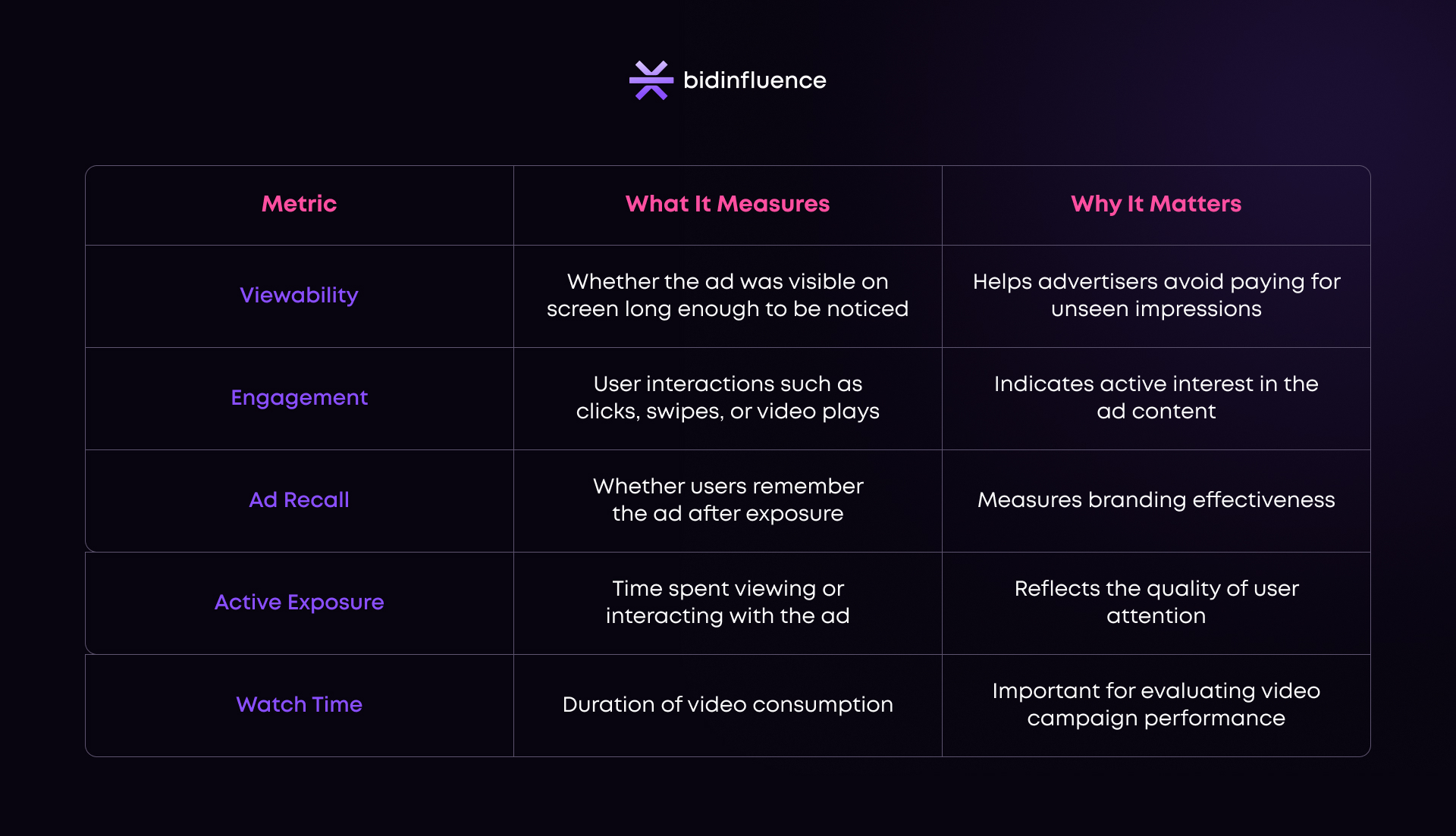
Modern RTB platforms and analytics systems use behavioral signals, scrolling patterns, cursor movement, dwell time, and video interaction data to estimate the quality of attention. These metrics allow advertisers to assess inventory more accurately, optimize campaign efficiency, and prioritize placements that drive real user interest rather than passive impressions.
Modern Display and Rich Media Ads in Programmatic Advertising
Display advertising has evolved significantly from traditional static banners. Modern display formats now include responsive creatives, animated elements, adaptive sizing, and personalized messaging that adjusts to user behavior and device type. These improvements help ads blend more naturally into digital environments while remaining visually noticeable.
Rich media advertising takes engagement even further by introducing interactive features such as expandable banners, embedded video, swipe galleries, mini games, and dynamic product showcases. These formats encourage users to interact directly with the ad rather than passively view it. As a result, advertisers often achieve higher engagement rates, longer exposure times, and stronger brand recall compared to conventional banner campaigns.
Within RTB ecosystems, engagement signals influence how auctions evaluate ad inventory. Publishers offering highly viewable and interactive placements can often attract higher bids from advertisers. Demand-side platforms also prioritize inventory with stronger historical engagement metrics because it typically delivers better campaign performance and higher conversion potential.
Why Video and CTV Ads Generate Higher Engagement
Video and Connected TV advertising have become some of the most valuable formats in modern programmatic ecosystems. Unlike static ads, video content naturally captures attention through motion, sound, storytelling, and full-screen presentation. CTV environments amplify this effect because users typically consume content on larger screens with fewer distractions and greater focus.
Advertisers closely monitor metrics such as completion rate, watch time, audible playback, and viewer retention to evaluate campaign quality. High completion rates often indicate that users actively watched the content instead of ignoring it. When audiences watch longer and remain engaged throughout, brands become more memorable, increasing the chances of driving meaningful user actions.
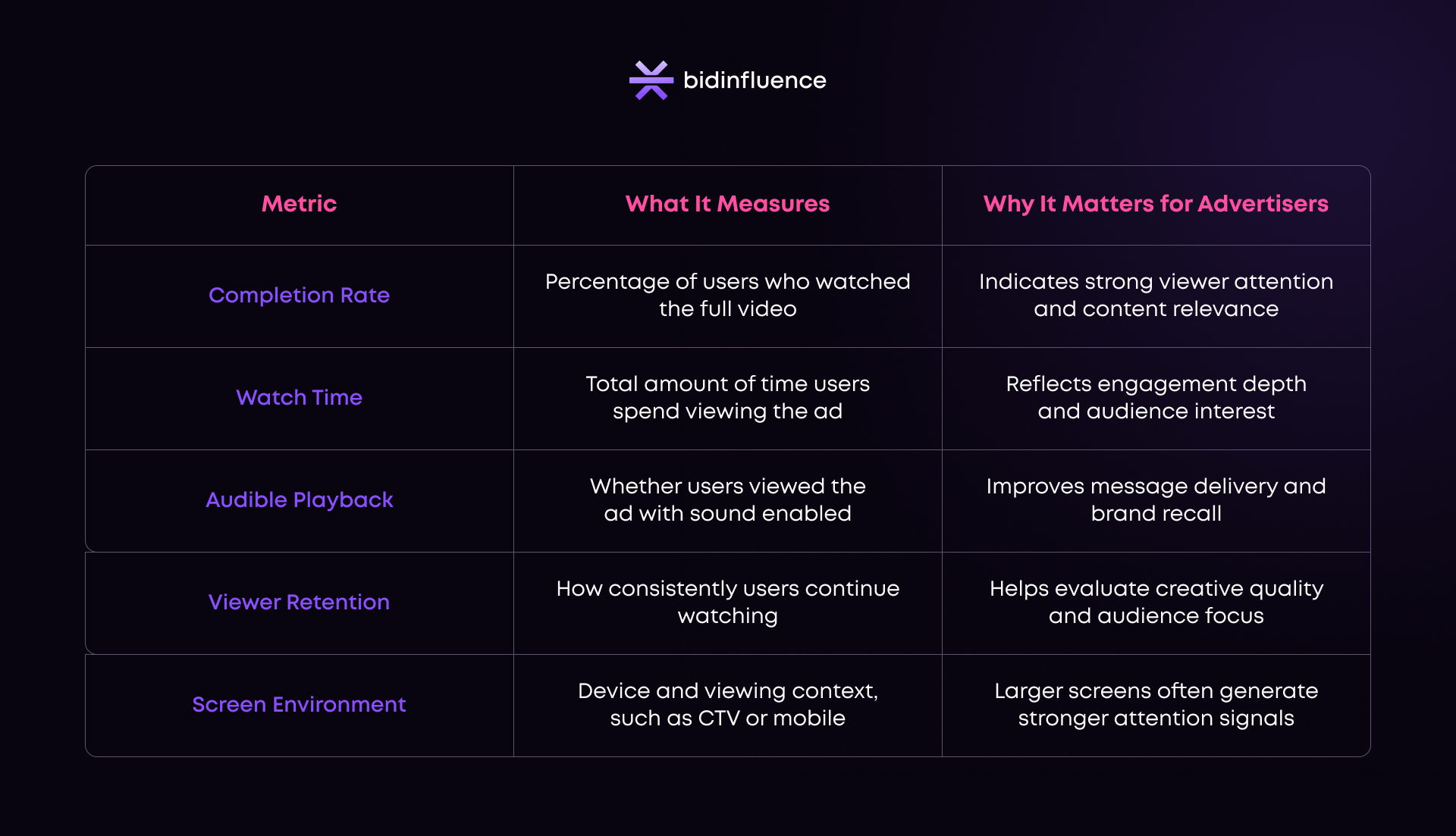
These factors contribute to the higher CPM commonly associated with video and CTV inventory. In RTB auctions, advertisers are often willing to pay premium prices for placements that generate stronger engagement and more reliable attention signals. As a result, publishers with high-quality video inventory can achieve significantly greater monetization efficiency.
Native and In-App Formats: Blending Ads Into the User Experience
Developers designed native and in-app advertising formats to integrate naturally into digital environments without interrupting the user journey. Unlike traditional display ads, native placements match the design, layout, and content structure of websites or applications, making advertisements feel less intrusive and more relevant to users.
Modern native formats now include personalized recommendation widgets, sponsored content feeds, interactive product cards, and AI-driven contextual targeting. In-app advertising has also evolved significantly, with full-screen experiences, playable ads, rewarded video ads, and seamless mobile integrations that adapt to user behavior and app activity.
Rewarded video has become one of the most successful engagement-driven formats, especially in mobile gaming and entertainment apps. Users choose to view advertisements in return for rewards, exclusive content, or access to enhanced app features. This creates a positive value exchange that increases completion rates and improves advertiser performance.
Because these formats drive stronger engagement and higher user retention, advertisers often prioritize them in RTB campaigns and allocate higher budgets to premium native and in-app inventory.
How RTB Platforms Evaluate Engagement Signals Across Ad Formats
Modern RTB platforms no longer evaluate ad inventory based solely on audience targeting and bid price. SSPs, DSPs, and ad exchanges increasingly rely on engagement-related signals to estimate the potential value of each impression before an auction is completed.
Viewability is one of the most important factors. Inventory with a strong history of visible impressions often attracts higher bids because advertisers want to maximize the likelihood that users will actually see their ads. Platforms also analyze interaction data, including clicks, video completions, swipe actions, and engagement rates, for similar placements.
Additional signals help predict future performance: session duration, browsing behavior, device type, app usage patterns, and content context provide valuable insights into user attention. For example, users who spend longer in an app or actively consume video content may generate stronger engagement signals than users who quickly navigate between pages.
Using machine learning models, DSPs estimate the probability of engagement and conversion for each impression. As a result, inventory associated with higher predicted attention and interaction levels often achieves stronger auction performance and higher CPMs across programmatic advertising ecosystems.
The Future of Attention-Driven Advertising
Digital advertising is steadily moving toward models that prioritize measurable attention and business outcomes rather than simple impression volume. Advertisers increasingly seek inventory that demonstrates strong engagement, higher viewability, and meaningful user interaction. As a result, attention-based metrics are becoming an important factor in campaign optimization and media buying decisions.
AI is accelerating this shift by helping platforms analyze user behavior, predict engagement likelihood, and optimize bidding strategies in real time. Advanced machine learning enables advertisers to pinpoint high-performing inventory by analyzing vast amounts of user behavior and contextual signals.
At the same time, privacy-first targeting is reshaping how advertisers reach audiences. As third-party cookies become less important, contextual signals, first-party data, and aggregated measurement methods are gaining greater value.
For publishers and advertisers, the future will depend on balancing user experience, privacy compliance, and performance. The ability to capture genuine attention while delivering measurable outcomes will increasingly define success in modern programmatic advertising.